 Skip to content



If your sales data shows Canada sitting comfortably in your top five customer markets, you already have a massive audience waiting for a better shipping experience. However, shipping across the border or managing logistics on your own eventually hits a wall.
Unpredictable customs delays, surprise brokerage fees, and high shipping rates can quickly destroy your customer experience. To protect your brand, you need to outsource fulfillment in Canada.
But how do you navigate this expansion smoothly? This strategic guide explains how a premium partnership will transform your business and help you scale.
1. The Real Cost of Delay: Hidden Cross-Border Pitfalls
Many brands postpone their expansion because they worry about setup costs. However, keeping your logistics cross-border often creates massive financial liabilities. When you ship individual orders into Canada from the US or other foreign countries, you face critical barriers:
- Carrier Broker and Disbursement Fees: Carriers like FedEx and UPS charge steep fees to clear customs. These costs lead directly to high shopping cart abandonment.
- The Customs Black Hole: Parcels often sit at border checkpoints for random screening, which completely ruins your delivery estimates.
- Unclaimed Packages & Return Shipping: If a buyer rejects a package due to unexpected duties, returning that item across the border is incredibly costly. Often, brands must write off this inventory entirely.
By working with a dedicated Canadian 3PL, you store your inventory locally. This domestic approach completely bypasses border delays and eliminates surprise fees.
2. Navigating the Importer of Record (IOR) path
For foreign companies, the biggest regulatory difficulty is improperly acting as the Importer of Record (IOR).
Many brands do not fully understand the Non-Resident Importer (NRI) program rules. To import bulk stock legally and safely, you must navigate complex Canadian regulations. This includes the new CARM Client Portal requirements and maintaining physical import records for six years.
Furthermore, if you sell regulated goods like cosmetics, supplements, or medical devices, you face strict hurdles. To distribute these items, you must partner with a provider that holds valid Health Canada licenses.
3. Decoding Canadian Logistics: The Math Behind Domestic Shipping Surcharges
Canada is geographically massive, and remote shipping is a constant hurdle. Indeed, private couriers routinely charge heavy “extended area” fees. These surcharges can make a single delivery cost ten times more than an urban shipment.
Pro Tip: Look at the second character of the Canadian Postal Code. If it is a zero (e.g., P0W 1A0), it designates a rural area where private carriers charge steep shipping fees.
Learn more: HERE
To protect your margins, you must understand the key factors that directly impact your Canadian shipping costs. Because Canadian logistics relies on dynamic pricing, four core elements determine your final rate:
A. Determine Billable Weight (Actual vs. Volumetric)
First, carriers bill based on whichever is greater: actual physical weight or volumetric weight. Therefore, once you know your packaged dimensions, you must calculate the volumetric baseline using industry formulas. Because box volume directly affects pricing, ignoring dimensional weight leads to massive budget spikes. Below are formulas for your reference:
- Canada Post: (Length × Width × Height) / 166 = Volumetric Weight (lbs)
- UPS, Canpar, FedEx: (Length × Width × Height) / 139 = Volumetric Weight (lbs)
B. Factor in Dynamic Fuel Surcharges
Second, standard rate tables do not reflect dynamic fuel fees. Consequently, you must manually add the current fuel surcharge percentage to your base rates. Because fuel surcharges adjust every Monday, final costs vary. Therefore, you should track these public schedules directly on carrier portals:
C. Apply Destination Provincial Tax
Third, logistics services in Canada are subject to provincial taxation based on the destination address. For simplicity during setup, you can use Ontario’s 13% HST as a reference point. However, your final model must reflect the actual tax rules of the destination province. For details, refer to the Canada Revenue Agency GST/HST Guide.
D. Account for Auxiliary Courier Surcharges
Finally, some remote areas incur extra carrier fees that standard rates omit. Thus, we highly recommend adding a note to your shipping policy. Specifically, state that additional shipping charges may apply to these destinations.
If you use courier networks instead of Canada Post, you must account for accessorial surcharges. These include:
- Residential delivery location fees
- Remote, extended, or isolated area surcharges
- Special handling fees for non-standard weights or packaging
For a complete breakdown, please refer to our Remote Location Shipping Guide.
4. Retaining Your Big-Box Retail Edge & Handling Volatility
These shipping complexities do not just impact your direct-to-consumer orders. In fact, they also threaten your wholesale expansion and special campaigns.
The Wholesale B2B Challenge
If you also sell through retail wholesale, you know legacy retailers enforce rigid routing guides. Failing to meet these rules results in severe on-time, in-full (OTIF) penalties, incorrect labelling fines, and rejected deliveries. You must handle strict EDI requirements, floor-ready packaging, and precise carrier routing appointments. For example, when brands deliver wholesale orders to premium retailers like Hudson’s Bay, professional logistics execution is mandatory, as in the following case study.
The High-Velocity Campaign Challenge
Similarly, for crowdfunding creators or marketing teams, shipping thousands of rewards or PR packages within a tight window is a massive challenge. To handle these seasonal spikes without errors, your logistics must scale quickly. Relying on temporary agency labour often leads to a massive drop-off in picking accuracy and ruined deadlines.
5. Reverse Logistics: Turning Returns into Recovered Profits
Along with outgoing shipments, you must also manage the inevitable wave of incoming customer returns.
Handling customer returns across borders is a major headache. Without a local presence, return shipping is prohibitively expensive. Consequently, many international brands are forced to write off returned products entirely, completely erasing their margins.
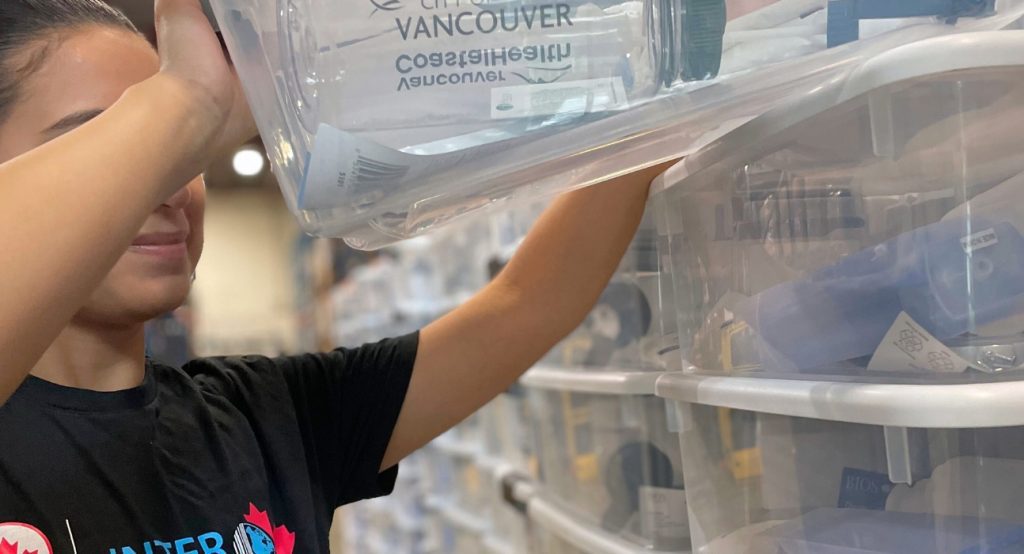
To save your stock, you need a local way to collect, inspect, grade, and restock returned items quickly.
6. The Connected Solution: How InterFulfillment Addresses Every Challenge
When you look at these connected obstacles, the path forward is clear. Trying to manage all of this internally or across borders prevents you from growing your brand. This is exactly why you must outsource your logistics to a premier partner.
At InterFulfillment, we resolve these exact operational bottlenecks by delivering tailored 3PL solutions engineered for your brand’s unique needs:
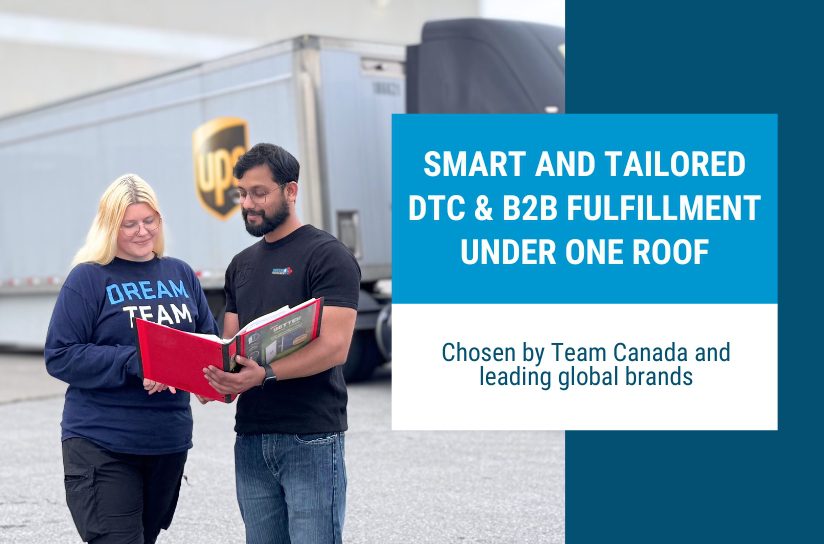
- True Omnichannel Expertise (DTC & B2B Under One Roof): First, we eliminate the need for split inventories. Because we house your direct-to-consumer and business-to-business operations under a single roof, you gain total inventory control. Whether you are shipping a single parcel to a retail shopper or shipping massive freight pallets to a commercial warehouse, our team manages both channels simultaneously.
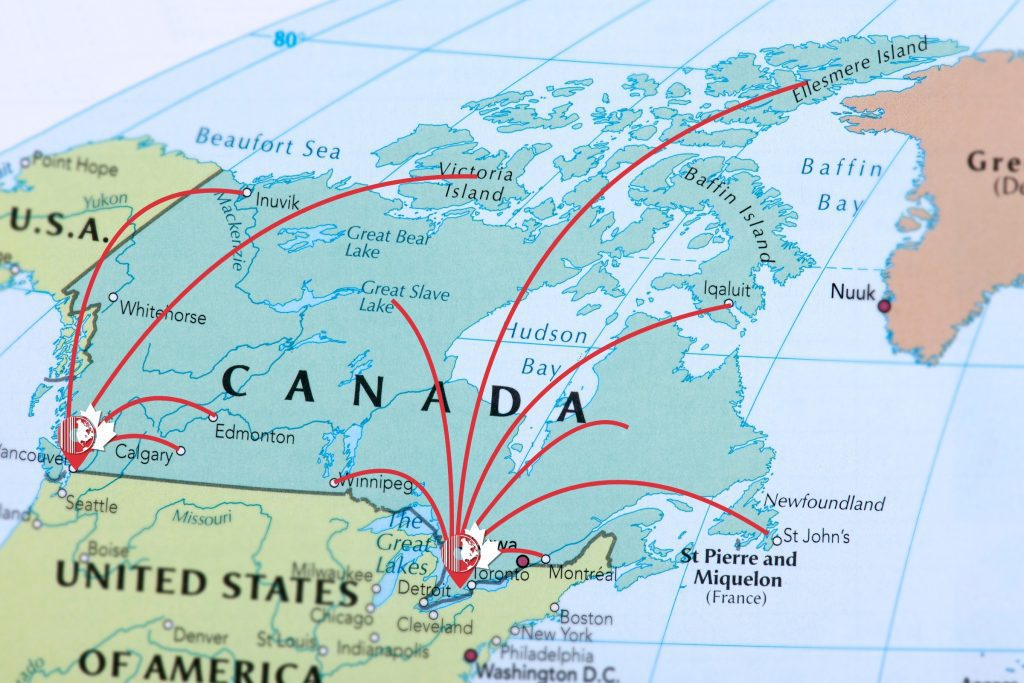
- Bypass the Border: By storing your stock in our modern facilities across Toronto and Vancouver to be closer to your customers, you save on shipping fees and eliminate cross-border customs delays, surprise brokerage fees, and cart abandonment.
- Regulatory & Licensing Support: We hold valid Health Canada licenses to safely store and distribute regulated goods. Working with a qualified 3PL like InterFulfillment and an experienced regulatory agency such as Delltech ensures that your products are stored, processed, and shipped in fully GMP-compliant facilities. This guarantees safe handling and efficient fulfillment, while allowing your team to focus on sales and growth rather than regulatory compliance.
- Automated RateShop Technology: We use Rateshop to analyze carrier rates in real time. It automatically chooses the most cost-effective option for every order.
- B2B Retail Compliance: We have in-depth experience working with major big boxes. We manage strict EDI integration, UCC-128 labelling, and routing guidelines to keep your vendor record perfect.
- In-House Labour & Project Coordination: We maintain an in-house HR department to ensure highly trained teams handle your seasonal spikes or crowdfunding campaigns without errors. You also get a dedicated project coordinator to plan complex kitting.
- Streamlined Reverse Logistics: Returns the route back to the closet warehouses (our local Toronto or Vancouver hubs), where we inspect and restock them according to your exact guidelines.
The Ultimate Standard of Reliability
When you search for the best 3PL company in Canada, look for proven reliability. There is no higher operational test than managing elite sports logistics on a global scale.
InterFulfillment is incredibly proud to be the official order fulfillment logistics partner for Team Canada. We bring this exact same Olympic-level precision, deep expertise, real-time support, and transparent billing to your business every single day.
Transform Your Canadian Supply Chain Today
Stop treating northern buyers like international strangers, and stop letting logistics hurdles stunt your growth. Let InterFulfillment turn your Canadian supply chain into a seamless engine for continuous growth.
Frequently Asked Questions (FAQ)
CARM (CBSA Assessment and Revenue Management) is a massive digital initiative by the Canadian government to simplify tax collection. Specifically, any brand importing commercial goods into Canada must register on the CARM Client Portal. If you do not set up your account and post your required financial security, the border will hold your freight.
To make this choice, you must analyze your historical sales data. If your customers are spread evenly across Canada, splitting stock between an East Coast hub (Toronto) and a West Coast hub (Vancouver) is ideal. This strategy places your inventory closer to major populations, which slashes transit times and minimizes shipping costs. However, if your Canadian volume is still growing, starting with a single centralized hub in Toronto is a highly practical, cost-effective baseline.
Standard warehouses are only designed to hold basic consumer goods like apparel or electronics. Conversely, products like cosmetics, health supplements, and natural health products require strict temperature controls, batch tracking, and clean environments under Health Canada guidelines. To distribute these legally, you must partner with a 3PL that holds active Site Licenses. This partnership guarantees complete Good Manufacturing Practices (GMP) compliance, protecting your brand from costly product seizures or fines.
Key Takeaways
- Outsourcing fulfillment in Canada is essential to avoid customs delays, hidden fees, and shipping challenges.
- Partnering with a dedicated 3PL can streamline logistics and eliminate cross-border issues.
- Understanding regulations and shipping costs, such as taxes and surcharges, is crucial for effective logistics management.
- Proper handling of returns and inventory management optimizes profit margins and customer satisfaction.
- InterFulfillment offers tailored solutions for seamless operations in both direct-to-consumer and B2B markets.