 Skip to content




Q4 peak season brings a massive increase in direct-to-consumer orders and wholesale retail shipments. However, unmanaged sales surges often strain warehouse operations and national carrier networks.
Therefore, preparing your supply chain early protects your profit margins and preserves customer trust. Below, we cover essential steps to align your fulfillment partner, avoid Q4 bottlenecks, and streamline peak season operations.
1. Audit Your Historical Sales Data and Forecast Early
First, analyze your sales numbers from previous holiday seasons to forecast inventory needs accurately. Because unexpected stockouts cause lost revenue, share your promotional calendars with your third-party logistics provider early. Consequently, your fulfillment team can allocate sufficient warehouse space and schedule seasonal labour in advance.
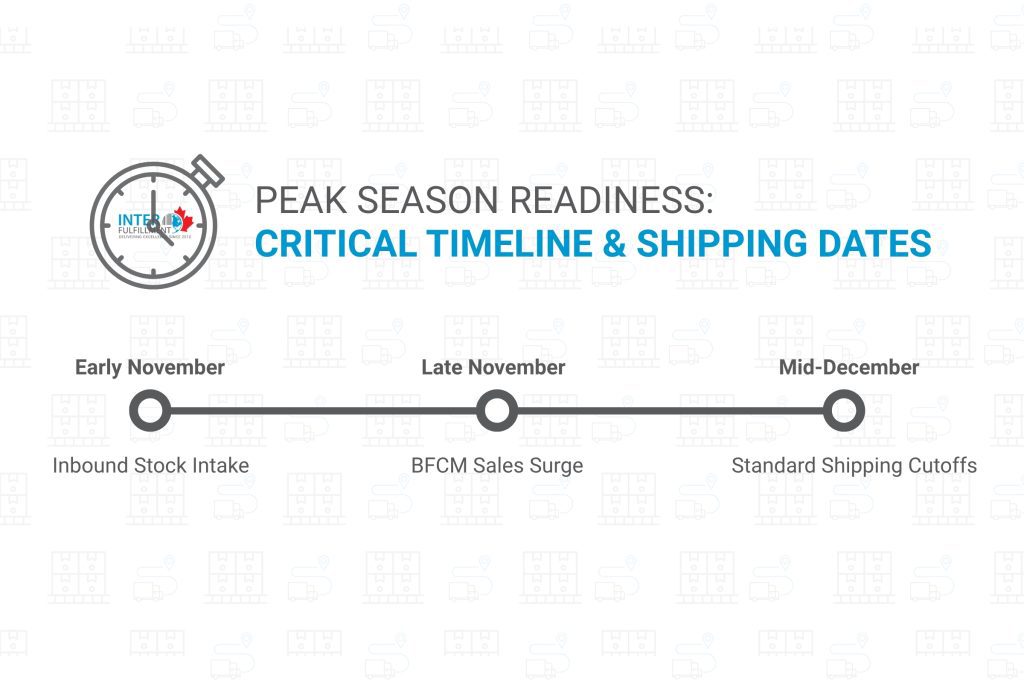
Furthermore, ensure you send inventory to your 3PL well before carrier cutoffs begin.
2. Establish Clear Carrier Cutoff Dates and Shipping Expectations
Second, carrier networks experience significant volume spikes starting in mid-November. To prevent missed holiday deliveries, communicate clear order cutoffs on your storefront checkout pages. For example, standard domestic ground shipping cutoffs typically land around mid-December across major carriers.
In addition, utilizing a dual-node strategy in Toronto and Vancouver keeps inventory closer to buyers. As a result, localized distribution slashes transit times and reduces zone-based parcel surcharges.
3. Checklist: What Merchants Need to Check with Operations or Their 3PL
Before peak season hits full force, perform a comprehensive operational review. Use this operational checklist to verify readiness with your internal team and your 3PL partner:
- Inbound Receiving Cutoffs: Confirm the deadline for receiving inbound containers or pallets so stock is sellable before major promotion dates.
- Daily Order Cutoff Times: Verify standard daily order processing cutoffs (e.g., 12:00 PM local time for same-day dispatch).
- Multi-Channel Inventory Partitioning: Confirm your Warehouse Management System (WMS) locks inventory allocated for B2B retail buyers so DTC flash sales do not consume it.
- Packaging and Consumables Supply: Ensure adequate stock of branded boxes, custom mailers, poly bags, and promotional inserts.
- Health Canada & Lot-Tracking Protocols: For wellness, cosmetic, or health brands, ensure strict First-Expired, First-Out (FEFO) picking logic remains active during high-volume spikes.
- Carrier Surcharge Transparency: Review peak-season courier surcharges and confirm automated rate-shopping technology routes every package via the most cost-effective carrier.
What to Look for in a Canadian 3PL Partner (And How InterFulfillment Delivers)
When evaluating partners to handle your Canadian order volume, reliability under peak season pressure is essential. Rather than relying on basic warehousing, look for a provider equipped to solve Canada’s unique geographical and regulatory challenges.
Here is how InterFulfillment approaches these critical operational requirements:
High-Stakes Operational Reliability
Managing peak holiday surges requires absolute accuracy and strict deadline adherence. As the official order fulfillment partner for Team Canada, InterFulfillment operates under verified high-stakes standards. This proven track record ensures your high-volume promotional events run smoothly without warehouse delays.
Strategic East and West Coast Hubs
Canada’s vast geography makes single-warehouse strategies expensive for coast-to-coast shipping. By operating dual fulfillment centers in both Toronto and Vancouver, InterFulfillment places your inventory close to major population centers. Consequently, this setup reduces transit zones, lowers shipping costs, and speeds up customer delivery nationwide. (Confidence Level: High)
Built-In Health Canada Regulatory Support
Selling cosmetics, supplements, or natural health goods in Canada involves strict federal oversight. InterFulfillment operates under an active Health Canada Site License in a strategic legal partnership with Dell Tech Laboratories Ltd. While Dell Tech manages regulatory oversight, InterFulfillment handles daily warehouse execution, complete with lot tracking and full GMP compliance.
True Multi-Channel Inventory Control
Balancing direct-to-consumer sales with retail wholesale distribution requires real-time data flow. InterFulfillment offers native integrations for platforms like Shopify, WooCommerce, Amazon, and Walmart, combined with complete EDI capabilities for major retailers. As a result, your direct-to-consumer store and wholesale channels sync effortlessly, maintaining a single source of inventory truth.
Conclusion: Turning Peak Season Logistics into a Competitive Advantage
Navigating Q4 peak season successfully comes down to early preparation, clear communication, and dependable operational execution.
By auditing your historical data early, setting realistic carrier shipping cutoffs, and performing a thorough operational review with your internal team, you can protect your customer experience and preserve your margins during the busiest time of the year.
Partnering with an experienced 3PL company in Canada like InterFulfillment gives your brand the infrastructure it needs to handle sudden volume surges with confidence. With strategic warehouse hubs in both Toronto and Vancouver, Health Canada site licensing, and native multi-channel software integrations, your supply chain remains secure, accurate, and scalable from coast to coast.
As you finalize your Q4 strategy, take the time to review your fulfillment setup and address potential bottlenecks before the holiday rush begins.
FAQs
A domestic 3PL provides a localized return processing center, eliminating expensive cross-border shipping costs and customs delays. Upon receiving returned parcels, warehouse staff inspect, grade, and restock eligible goods based on your criteria so you can issue refunds faster and return items to active stock.
Merchants should begin aligning with their 3PL partner in late Q2 or early Q3. Sharing your holiday promotional calendar, sales forecasts, and planned marketing events early gives your warehouse team enough time to secure storage space, configure software workflows, and hire seasonal labour.
A dual-node strategy splits inventory between warehouse hubs on the East Coast (such as Toronto) and West Coast (such as Vancouver). Shipping parcels locally drastically reduces carrier transit zones, slashes freight fees, and speeds up ground delivery times for buyers nationwide during peak shipping windows.
Key Takeaways
- Q4 peak season demands early preparation to avoid bottlenecks in warehouse operations and carrier networks.
- Audit historical sales data and communicate with your 3PL in advance to forecast inventory needs and allocate space.
- Establish clear carrier cutoff dates and utilize a dual-node strategy to reduce shipping costs and improve delivery times.
- Partnering with a reliable 3PL in Canada like InterFulfillment enhances operational efficiency and compliance with regulations.
- Effective communication and thorough operational reviews help maintain customer trust and profit margins during the busy season.