 Skip to content



Estimated reading time: 6 minutes
Securing a major purchase order from a top Canadian commercial buyer (such as Costco, Canadian Tire, Walmart, or RONA) marks a transformative moment for any expanding brand. However, getting your products onto retail store shelves requires navigating a strict web of operational mandates.
Major Canadian retail chains operate automated, highly synchronized distribution networks. To maintain network speed, these enterprise buyers enforce rigid vendor standard operating procedures (SOPs). Even minor operational errors (such as incorrect pallet stacking, a missing barcode label, or a late electronic shipping notice) lead to severe consequences.
Non-compliance causes delayed store shelf placement, rejected dock deliveries, and costly financial chargebacks that directly erode your profit margins. Partnering with an experienced logistics authority ensures your retail supply chain moves seamlessly without operational friction.
Demystifying the Retailer Routing Guide
A vendor routing guide is an enterprise buyer’s detailed manual for inbound freight compliance. It outlines every physical, technological, and administrative rule your warehouse team must follow when preparing shipments.
Key requirements governed by routing guides include:
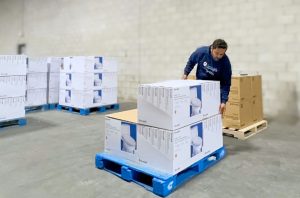
- Pallet Configuration: Specific rules regarding the mandatory use of standard 48×40 blue CHEP pallets, strict pallet height limits, overhang tolerances, corner-board reinforcement, and stretch-wrapping thickness.
- Master Case & Pallet Labelling: Exact placement and scan accuracy for GS1-128 (UCC-128) barcode shipping labels.
- Dock Scheduling: Approved carrier selection, strict Less-Than-Truckload (LTL) arrival windows, and delivery appointment bookings.
- Document Alignment: Compliant Bills of Lading (BOL), packing slips, and electronic dispatch notices.
Automated EDI: The Digital Backbone of Retail Logistics
Executing high-volume B2B order fulfillment services in Canada requires seamless digital communication. Electronic Data Interchange (EDI) replaces manual data handling by connecting your brand’s order management platform directly to retailer software networks.
To execute reliable omnichannel order fulfillment in Canada, three core EDI transaction sets must process flawlessly:
EDI 850 (Purchase Order)
The retailer transmits an automated digital purchase order containing SKU counts, delivery destinations, and mandatory fulfillment timelines.
EDI 856 (Advance Shipment Notice/ASN)
Before a delivery truck leaves the warehouse dock, an EDI 856 ASN must reach the buyer’s network. This transmission details the exact physical layout of every pallet, carton, and item inside the shipment, enabling rapid receiving at the retailer’s hub.
EDI 810 (Commercial Invoice)
Upon verified dock receipt, an automated EDI 810 commercial invoice transmits to streamline billing and protect cash flow.
Protecting Your Profit Margins from Retail Chargebacks
Retail chargebacks are automated penalty deductions applied directly to your sales invoices when shipments violate routing guides. These fines offset the costs incurred by retail distribution hubs when non-compliant freight disrupts their automated sorting lines.
Understanding common compliance triggers helps you protect your commercial revenue:
Primary Sources of Retail Penalties
- Out-of-Sync ASN Dispatches: Delivering physical goods before the corresponding EDI 856 ASN processes leads to immediate dock rejections.
- Unscannable GS1-128 Labels: Poorly printed or incorrectly placed barcode labels stall automated distribution centre conveyors.
- Physical Packaging Errors: Rejecting non-grade white pallets or failing to use required CHEP pallets, alongside incorrect pallet heights or loose stretch-wrapping, compromises freight safety during transport.
- Missed Dock Appointments: Arriving outside allotted delivery appointment windows creates hub congestion and triggers late-arrival penalties.
Unifying B2B Retail and Wholesale, and DTC E-Commerce Fulfillment
Managing enterprise retail distribution and direct-to-consumer online orders in separate facilities increases inventory holding costs and splits labour overhead.
Partnering with a specialized DTC ecommerce 3PL that excels in enterprise B2B execution consolidates your inventory into a single operational hub.
Health Canada Site Licensed Warehousing
If your brand distributes cosmetics, natural health products, dietary supplements, or skincare items, compliance extends beyond retail routing guides. Operating with a Health Canada site-licensed 3PL ensures complete regulatory adherence across both bulk wholesale dispatches and consumer parcel shipments.
This guarantees audit-ready lot control, product integrity, and batch tracking across your entire supply chain.
InterFulfillment: Canada’s B2B Retail and Wholesale Logistics Authority
InterFulfillment is a premier third-party logistics provider specializing in complex B2B retail distribution and high-velocity DTC fulfillment across Canada.
Operating dual-node, strategically located warehouse hubs in Toronto and Vancouver, InterFulfillment provides the infrastructure, technology, and industry experience required to navigate demanding retail vendor standards.
Deep Mastery of Retail Routing Guides
InterFulfillment maintains extensive operational experience with major Canadian retailers, including Costco, Canadian Tire, Home Depot, Walmart, and RONA. Their warehouse teams strictly enforce vendor packaging specifications, CHEP pallet requirements, GS1-128 labelling rules, and custom display pallet assembly.
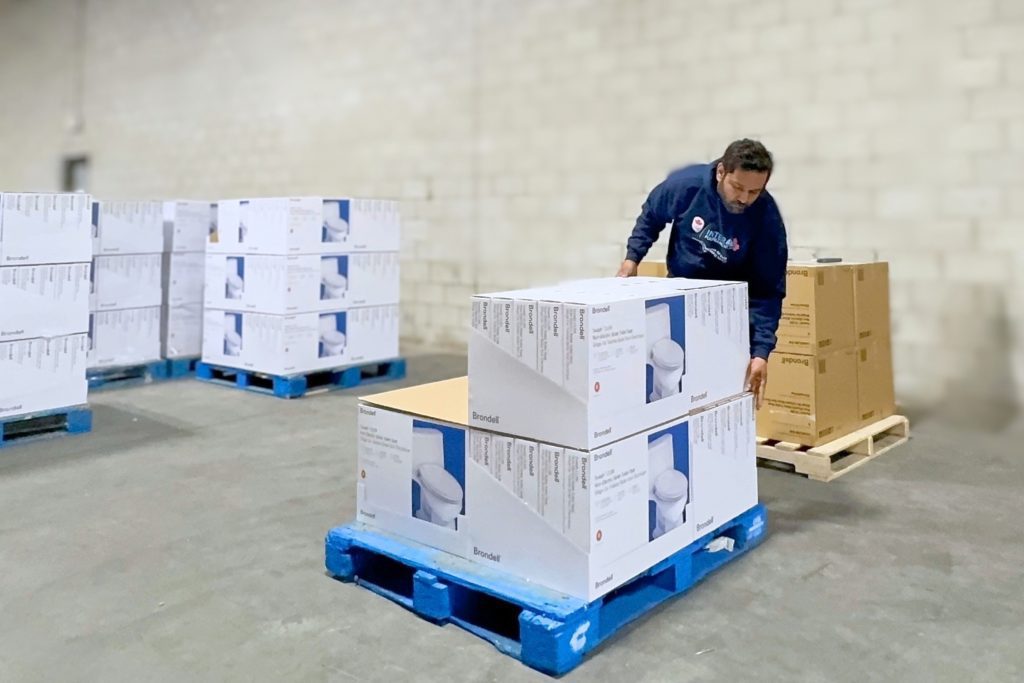
This deep compliance expertise ensures your products arrive fully compliant, preventing inventory shelf-placement delays and protecting your brand from costly chargebacks.
Automated EDI and SOC 2 Type II Certified Security
InterFulfillment connects directly with enterprise retail networks using SOC 2 Type II certified data security protocols.
Automated EDI and Open API integrations map order data in real time, guaranteeing exact ASN generation and eliminating human data entry errors.
Integrated End-to-End Transportation
Beyond warehousing, InterFulfillment manages complete inbound and outbound transportation needs. Their services include LTL and FTL freight dispatching and automated parcel rate shopping.
Frequent Asked Questions
A retail routing guide is a comprehensive compliance manual issued by a commercial buyer to its suppliers. It defines every physical, technological, and administrative rule required for inbound inventory deliveries at their distribution centres or retail stores.
Major Canadian retail chains enforce strict pallet standardization to maintain automated distribution centre efficiency. CHEP pallets provide a durable 48×40-inch wooden base that fits automated conveyor systems and heavy forklift equipment without risking collapse or product damage.
Electronic Data Interchange (EDI) automatically maps order data between your systems and the retailer’s software network. Transmitting an automated EDI 856 Advance Shipment Notice (ASN) before your truck leaves the warehouse ensures the retail hub receives exact inventory details, eliminating receiving delays and non-compliance fines.
If your brand sells regulated goods (such as cosmetics, natural health products, dietary supplements, or skincare), regulatory compliance is mandatory. A Health Canada site-licensed 3PL enforces strict batch control, lot tracking, and temperature management across both wholesale dispatches and online parcel orders.
Key Takeaways
- Securing major purchase orders from Canadian retailers requires strict adherence to operational mandates and routing guides.
- Non-compliance can lead to severe penalties, including chargebacks and delayed shelf placement, impacting profit margins.
- Automated EDI ensures seamless communication between brands and retailers, preventing retail chargebacks and ensuring compliance.
- Partnering with a specialized 3PL, like InterFulfillment, helps streamline B2B and wholesale fulfillment operations in Canada by consolidating logistics and maintaining compliance.
- Using Health Canada site-licensed providers ensures regulatory compliance for brands distributing regulated goods.
Published on:
Written by: